The same firmware, rebuilt
Rockbox has run on the iPod classic for years, and it is good software. It is another system, though. The interface, the feel of the wheel and the transitions Apple tuned live in the retail firmware and nowhere else.
Chikuma reproduces RetailOS itself, function by function, from the shipped image. The original firmware stays alongside it, and every answer gets checked against the original.
Checked against the firmware
Any difference between Chikuma and RetailOS counts against Chikuma. Both boot the same disk on the same emulated machine, so checking a screen comes down to a screenshot subtraction.
Every value is labelled
A value is MEASURED from the image or a live trace, INFERRED on top of a measurement, or OURS. An OURS stand-in says so in the file, at the place it stands in.
The UI builds itself
The archive's records name each screen's classes, rows and events, down to where it leads, and the code walks them. Chikuma draws no screen by hand, and neither does the original.
Fidelity to behaviour
Chikuma has to stay recompilable and changeable, so it does not match Apple's compiler output byte for byte. It matches the behaviour, checked by subtraction against the original on the same machine.
Libraries from upstream
Apple shipped FreeType, SQLite, zlib and the Vincent OpenGL ES implementation inside this firmware. Chikuma takes them from upstream at versions of its own choosing, and recovers only the parts Apple grew onto them.
Where it is today
It boots from reset. The mask boot ROM and Apple's EFI NOR bootloader are reproduced in C too, and that chain boots Apple's own unmodified firmware as well as Chikuma. It runs on a real iPod classic, from its own bootloader in flash, and that unit is in daily use.
The kernel is the firmware's own RTXC design with its real task table. Storage, display and USB are driven, along with the wheel and the PMU, and the disk is written as well as read.
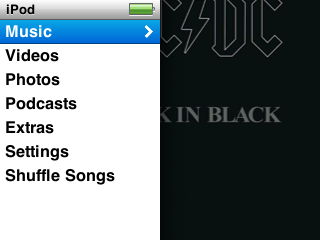
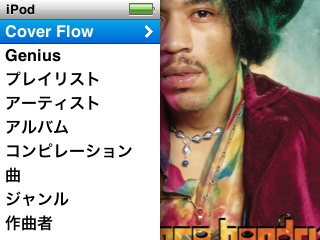
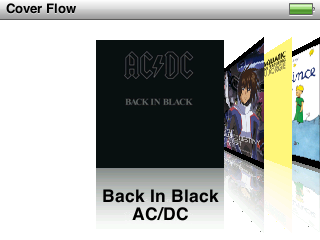
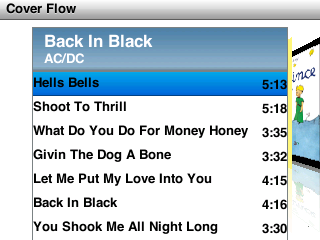
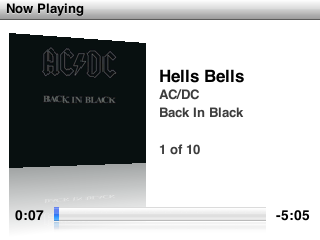
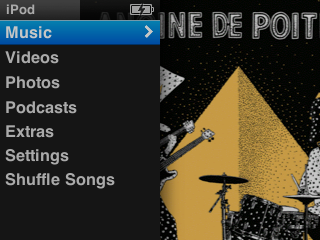
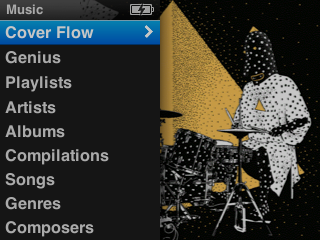
The menus build from the archive and drill down through Artists, Albums and Songs. Photos, Calendars, the World Clock and the games open. Music plays through the sm1 audio DSP, on the device already, and films play at full rate.
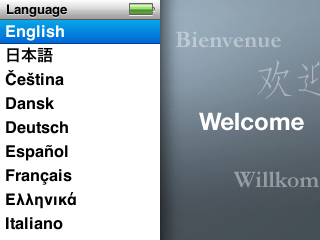
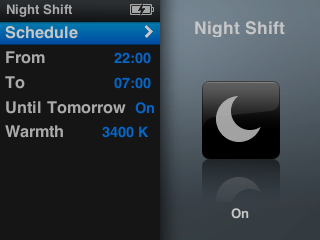
Pick a language on the first-boot screen and the interface answers in it, in any of the twenty Apple shipped, out of the firmware's own containers. A few things belong to Chikuma alone, never to the original, the dark skin and Night Shift among them, each declared as such.
Not a release
There is no installable build. The hardware install path exists and runs every day on one development unit, but it is developer plumbing. Read On the device before going anywhere near a real iPod.
Why "Chikuma"
千 sen is a thousand and 曲 kyoku is a musical track. Together they say a thousand songs, the five words Steve Jobs used to introduce the iPod in 2001. Read as one word, 千曲 is Chikuma, a river in Nagano named for the thousand bends the water takes on its way down from the mountains.
The name has no pod suffix, no Apple-derived morpheme and no trademark surface. Chikuma is not
affiliated with, endorsed by, or connected to Apple Inc.